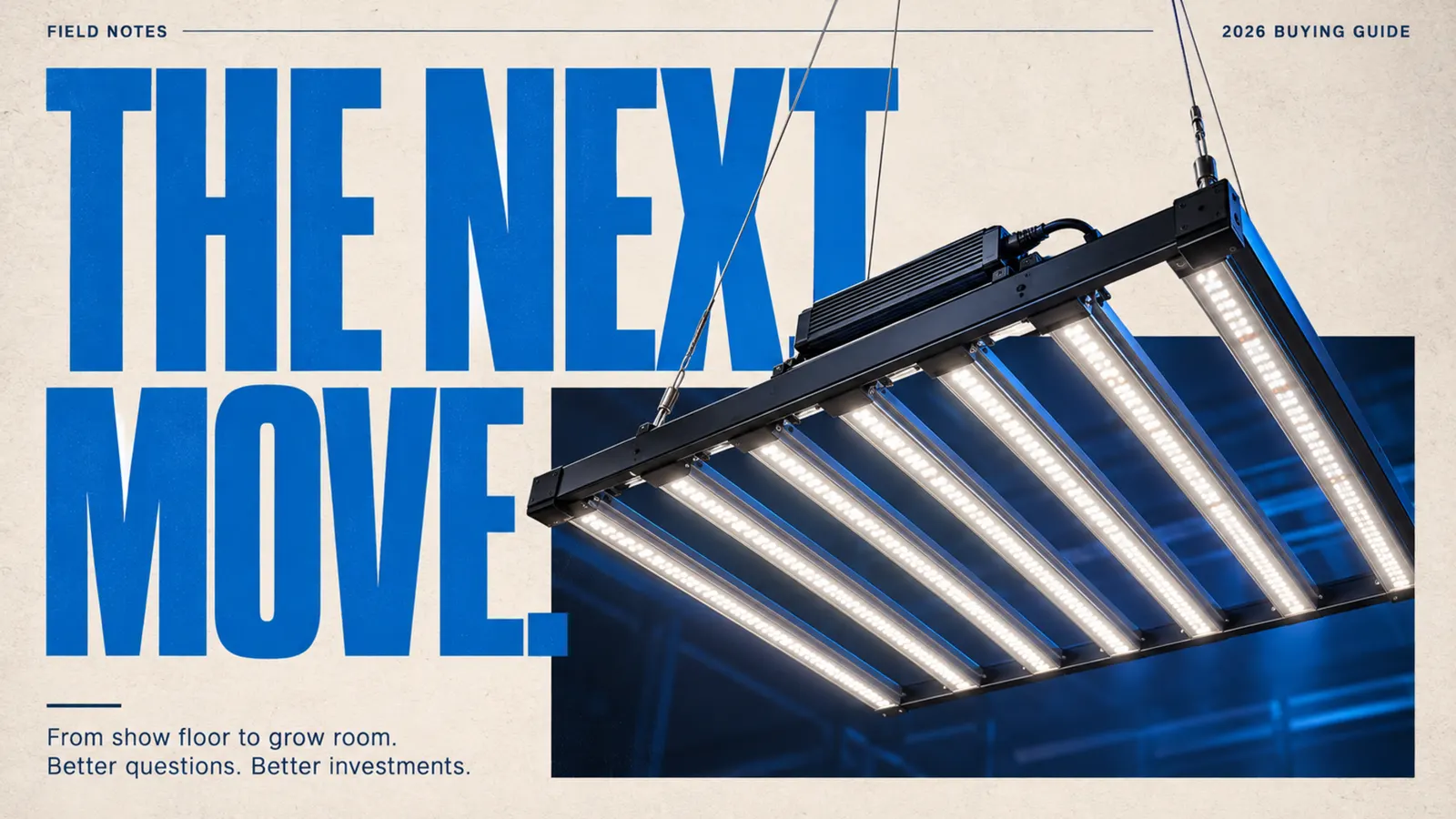
A trade show puts a remarkable amount of equipment within walking distance. Lighting, climate systems, controls, and facility hardware all compete for attention.
The challenge is deciding which conversations deserve to become projects.
Start with a short list of problems you want to solve at your facility. Then use the show floor to gather comparable information. A compelling demonstration is an opening to ask better questions.
1. What problem does this solve in our operation?
Tell the supplier what you run today and what you want to improve. Ask where their product is a strong fit—and where it is not.
A proposal for a new growing area may differ from one for an operating room. Ask what information is needed to recommend equipment for your specific layout, crop requirements, operating schedule, and existing infrastructure.
2. What evidence supports the performance claim?
Request the exact model number, specifications, test information, and conditions behind the comparison. If a demonstration describes improved results, ask what else changed and whether there was a comparable baseline.
For lighting, the DesignLights Consortium's horticultural requirements offer a reference for product qualification and reported performance.[1] Verify the particular model rather than treating a brand name or a general eligibility statement as enough.
Any proposed production improvement should come with assumptions that your cultivation team can evaluate.
3. What has to change around the equipment?
Ask about electrical service, mounting, controls compatibility, communications, environmental capacity, commissioning, and operator training. Have qualified installers or designers confirm requirements before the project is committed.
An interesting product needs to fit a complete installation plan. Ask the supplier to identify which items are included in its price and which require another contractor or purchase.
4. What does ownership look like after installation?
Request the maintenance instructions and warranty terms. Ask who handles service, where parts come from, and what the customer is responsible for if a component fails.
Ask to see routine adjustments and cleaning access during the demonstration. Put the people who will use and maintain the equipment into the evaluation early.
5. What is the full project cost?
Compare equipment, installation, supporting changes, training, and the timing of the work. Show projected energy and maintenance changes separately from any production assumptions.
Keep both the gross project cost and a scenario including a potential incentive. This lets the team see what the investment looks like while eligibility and funding are being reviewed.
6. What needs approval before we proceed?
Rebate requirements should be checked while you are still evaluating the project. PSE, for example, requires pre-approval before installation and requests supporting equipment information for horticultural applications.[2] Other programs may impose different deadlines, including rules tied to purchase commitments.
Send the utility information, proposed equipment, quantities, and timeline to What Rebates before placing an order. WR can assess applicable incentives and coordinate the application documentation.
Meeting suppliers at MJBizCon 2026? Visit What Rebates at Booth #19232 with your equipment shortlist. Let's turn the next promising conversation into a project worth evaluating.[3]